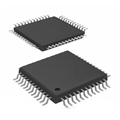
Hình ảnh chỉ để tham khảo
ESP8089
IC RF TXRX+MCU WIFI 32VFQFN
- Nhà sản xuất
- Ông. Phần #ESP8089
- Gói 32-QFN
- Bảng dữ liệu
- Có sẵn7762
100% gốc & amp; Mới
24 giờ sẵn sàng để vận chuyển
Bảo hành 365 ngày
RFQ & amp; Nhận thêm Giảm giá
Thông số kỹ thuật
| Package | Tape & Reel (TR),Cut Tape (CT) |
| ProductStatus | Not For New Designs |
| Type | TxRx + MCU |
| RFFamily/Standard | WiFi |
| Protocol | 802.11b/g/n |
| Frequency | 2.4GHz |
| DataRate(Max) | 54Mbps |
| Power-Output | 18.5dBm |
| Sensitivity | -98dBm |
| SerialInterfaces | SPI, UART |
| GPIO | 2 |
| Voltage-Supply | 3.3V |
| Current-Receiving | 60mA |
| Current-Transmitting | 215mA |
| OperatingTemperature | -40°C ~ 125°C |
| MountingType | Surface Mount |
| Package/Case | 32-VFQFN Exposed Pad |
Tổng quan
Description
Key features of the ESP8089 include a powerful processor, built-in Wi-Fi connectivity, and support for multiple interfaces such as GPIO, UART, and SPI. This allows it to be integrated into a wide range of devices, connecting them to the internet with minimal additional hardware requirements. The module is typically used in smart home devices, sensor networks, and other connected gadgets requiring efficient network communication.
ESP8089 modules are programmed using languages like C or Python, frequently using frameworks and environments such as the Arduino IDE or MicroPython. Its compact size and energy efficiency also make it suitable for battery-powered applications. However, for specific technical details and applications, consulting the module's datasheet or Espressif’s documentation is recommended.
Features
1. Wi-Fi Compatibility: Supports IEEE 802.11 b/g/n standards, making it compatible with most Wi-Fi networks.
2. Integrated TCP/IP Protocol Stack: Facilitates internet connectivity and network communication.
3. Low Power Consumption: Designed for efficient power usage, supporting sleep modes to extend battery life in portable applications.
4. Compact Size: Offers a small form factor suitable for embedding into various devices.
5. Programmable via AT Commands: Can be controlled using simple AT commands, which simplifies integration with microcontrollers.
6. SPI and SDIO Interfaces: Provides flexible connectivity options with host devices via SPI (Serial Peripheral Interface) or SDIO (Secure Digital Input Output).
7. High Performance: Capable of supporting high transmission rates.
8. Security Features: Includes support for WPA/WPA2 encryption to ensure secure wireless communication.
The ESP8089 is well-suited for applications requiring reliable wireless connectivity with minimal power consumption and space constraints.
Package
Pinout
In terms of pin count, the ESP8089 generally comes in a QFN package with 32 pins. These pins serve various functions necessary for Wi-Fi connectivity and communication with external components. Key functions include:
1. Power Supply Pins: These pins provide the necessary power to the chip.
2. UART Pins: Used for serial communication.
3. SPI/SDIO Interface: Supports SPI or SDIO interface for data exchange.
4. GPIO Pins: General-purpose input/output pins for interfacing with other devices or sensors.
5. RF Pins: Used for the antenna connection for Wi-Fi communication.
6. Clock Pins: Provide clock signals necessary for the device's operation.
7. Reset and Enable Pins: Used to reset or enable the chip's functionality.
These essential functions make the ESP8089 suitable for integration into a variety of wireless applications.
Manufacturer
Application
Equivalent
Vận chuyển
Phương pháp vận chuyển Chúng tôi
cung cấp dịch vụ vận chuyển toàn cầu thông qua DHL, FedEx, TNT, UPS hoặc bất kỳ nhà giao hàng khác mà bạn lựa chọn.
Tham khảo phí vận chuyển (DHL / FedEx):
Hãng DHL: Chi phí vận chuyển dao động từ $ 25- $ 45 (0,5kg), với thời gian giao hàng ước tính là 2-5 ngày làm việc.
FedEx: Chi phí vận chuyển dao động từ $ 25- $ 40 (0,5kg), với thời gian giao hàng ước tính là 3-7 ngày làm việc.
Sản phẩm UPS: Chi phí vận chuyển dao động từ $ 25- $ 45 (0,5kg), với thời gian giao hàng ước tính là 3-7 ngày làm việc.
TNT: Chi phí vận chuyển dao động từ $ 25- $ 65 (0,5kg), với thời gian giao hàng ước tính là 3-7 ngày làm việc.
EMS: Chi phí vận chuyển dao động từ $ 30- $ 50 (0,5kg), với thời gian giao hàng ước tính là 7-15 ngày làm việc.
Đăng ký Air Mail: Chi phí vận chuyển là $ 2- $ 4 (0.1kg), với thời gian giao hàng ước tính là 5-20 ngày làm việc.
Thanh toán
Payment Methods
Thời hạn thanh toán là 100% trả trước.
Hiện tại, chúng tôi chỉ chấp nhận các phương thức thanh toán dưới đây:
1. PayPal
2. Thẻ tín dụng / ghi nợ
3. Chuyển dây
Tương tự
-
![MX25R8035FM1IL0]() MX25R8035FM1IL0
Macronix
-
![MX29F400CBTI-70G]() MX29F400CBTI-70G
Macronix
-
![MX66U1G45GXDI00]() MX66U1G45GXDI00
Macronix
-
![MX25V4035FZUI]() MX25V4035FZUI
Macronix
-
![MX25V2033FM1I]() MX25V2033FM1I
Macronix
-
![MX30LF2G28AD-TI]() MX30LF2G28AD-TI
Macronix
-
![MX25L25673GMI-08G]() MX25L25673GMI-08G
Macronix
-
![MX25L2006EM1I-12G]() MX25L2006EM1I-12G
Macronix
-
![MX25L6433FM2I-08G]() MX25L6433FM2I-08G
Macronix
-
![MX25U6435FM2I-10G]() MX25U6435FM2I-10G
Macronix
-
![MX25U25645GXDI00]() MX25U25645GXDI00
Macronix
-
![MX25L25645GXDI-08G]() MX25L25645GXDI-08..
Macronix