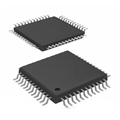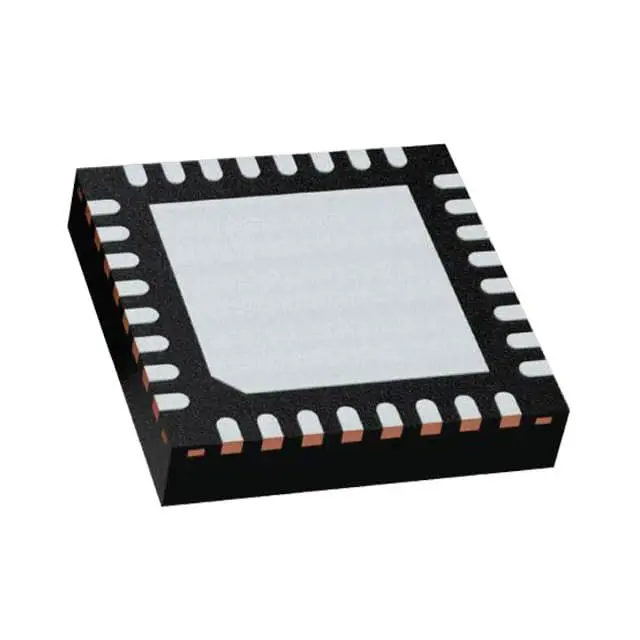
Hình ảnh chỉ để tham khảo
CC1201RHBR
IC RF TXRX+MCU ISM<1GHZ 32VFQFN
- Nhà sản xuất
- Ông. Phần #CC1201RHBR
- Gói VQFN (RHB)-32
- Bảng dữ liệu
- Có sẵn4659
100% gốc & amp; Mới
24 giờ sẵn sàng để vận chuyển
Bảo hành 365 ngày
RFQ & amp; Nhận thêm Giảm giá
Thông số kỹ thuật
| Package | Tape & Reel (TR),Cut Tape (CT) |
| ProductStatus | Active |
| Type | TxRx + MCU |
| RFFamily/Standard | General ISM < 1GHz |
| Modulation | 2FSK, 2GFSK, 4FSK, 4GFSK, MSK, OOK |
| Frequency | 164MHz ~ 190MHz, 410MHz ~ 475MHz, 820MHz ~ 950MHz |
| DataRate(Max) | 1.25Mbps |
| Power-Output | 16dBm |
| Sensitivity | -120dBm |
| MemorySize | 4kB ROM, 256B RAM |
| SerialInterfaces | SPI |
| GPIO | 4 |
| Voltage-Supply | 2V ~ 3.6V |
| Current-Receiving | 19mA ~ 23.6mA |
| Current-Transmitting | 33.6mA ~ 54mA |
| OperatingTemperature | -40°C ~ 85°C |
| MountingType | Surface Mount |
| Package/Case | 32-VFQFN Exposed Pad |
Tổng quan
Description
Typically, a course with such a code might pertain to a specialized subject area within a broader academic curriculum. The components of the course code—letters and numbers—could denote the department, course level, and specific focus within an institution's catalog. For example, "CC" could represent a department such as Computer Science, Communication, or Cultural Studies, while "1201" might suggest an introductory or intermediate level, depending on the institution's numbering system. "RHBR" could indicate a particular topic, instructor initials, or specialized content within the course series.
To gain a precise understanding of "CC1201RHBR," one would need to consult the course catalog or syllabus from the offering institution. This would provide detailed insights into the course's objectives, prerequisites, curriculum, and evaluation methods. If you are a student or prospective student, contacting the relevant department or academic advisor could also provide clarity.
Features
1. Frequency Range: Supports a wide range from 164 to 1900 MHz, making it versatile for various applications.
2. Modulation Schemes: It supports multiple modulation formats such as 2-FSK, 4-FSK, GFSK, and MSK, allowing for flexible communication setups.
3. Data Rate: Capable of handling data rates from 1.2 to 1 Mbps, catering to both low and high data rate requirements.
4. Low Power Consumption: Designed for low power operation, which is crucial for battery-powered devices.
5. High Sensitivity: Offers excellent receiver sensitivity, enhancing communication range and reliability.
6. Programmable Output Power: The output power is programmable, enabling optimization for different range and power requirements.
7. Robust Performance: Features such as frequency hopping, packet handling, and error correction contribute to robust and reliable performance.
8. Integrated Features: Includes features like a built-in temperature sensor and preamble quality indicator, aiding in efficient system design.
These features make the CC1201RHBR suitable for industrial, scientific, and medical (ISM) band applications, providing flexibility and efficiency in wireless designs.
Package
Pinout
Here is a brief overview of the pin functions:
1. Power Pins: These include the VDD pins for power supply and several ground pins.
2. RF Pins: These are used for connecting to the antenna and other RF components.
3. Digital Interface Pins: Include SPI interface pins (SCLK, MOSI, MISO, CSn) for communication with a host microcontroller.
4. Control Pins: Such as GDO0, GDO1, and GDO2, which are general-purpose digital output pins for status signaling.
5. Clock Pins: Provide clock inputs and outputs for synchronization purposes.
6. Reset Pin: Used to reset the chip.
7. Configuration Pins: Such as GPIO pins that can be configured for various functions.
This concise summary provides a basic understanding of the CC1201RHBR pin configuration and functionality, useful for integrating the transceiver into various RF communication applications. Always refer to the manufacturer's datasheet for detailed pin descriptions and electrical characteristics.
Manufacturer
Application
Equivalent
1. Semtech SX1276 - for LoRa and FSK modulation.
2. Silicon Labs Si4463 - a high-performance, low-current transceiver.
3. HopeRF RFM69HW - a versatile RF module for various applications.
4. Nordic Semiconductor nRF905 - suitable for the 433/868/915 MHz bands.
5. Microchip RN2483 - for LoRa technology in sub-GHz bands.
These alternatives vary in features, so ensure compatibility with your specific application needs.
Vận chuyển
Phương pháp vận chuyển Chúng tôi
cung cấp dịch vụ vận chuyển toàn cầu thông qua DHL, FedEx, TNT, UPS hoặc bất kỳ nhà giao hàng khác mà bạn lựa chọn.
Tham khảo phí vận chuyển (DHL / FedEx):
Hãng DHL: Chi phí vận chuyển dao động từ $ 25- $ 45 (0,5kg), với thời gian giao hàng ước tính là 2-5 ngày làm việc.
FedEx: Chi phí vận chuyển dao động từ $ 25- $ 40 (0,5kg), với thời gian giao hàng ước tính là 3-7 ngày làm việc.
Sản phẩm UPS: Chi phí vận chuyển dao động từ $ 25- $ 45 (0,5kg), với thời gian giao hàng ước tính là 3-7 ngày làm việc.
TNT: Chi phí vận chuyển dao động từ $ 25- $ 65 (0,5kg), với thời gian giao hàng ước tính là 3-7 ngày làm việc.
EMS: Chi phí vận chuyển dao động từ $ 30- $ 50 (0,5kg), với thời gian giao hàng ước tính là 7-15 ngày làm việc.
Đăng ký Air Mail: Chi phí vận chuyển là $ 2- $ 4 (0.1kg), với thời gian giao hàng ước tính là 5-20 ngày làm việc.
Thanh toán
Payment Methods
Thời hạn thanh toán là 100% trả trước.
Hiện tại, chúng tôi chỉ chấp nhận các phương thức thanh toán dưới đây:
1. PayPal
2. Thẻ tín dụng / ghi nợ
3. Chuyển dây
Tương tự
-
![MX25R8035FM1IL0]() MX25R8035FM1IL0
Macronix
-
![MX29F400CBTI-70G]() MX29F400CBTI-70G
Macronix
-
![MX25V2033FM1I]() MX25V2033FM1I
Macronix
-
![MX25V16066M1I02]() MX25V16066M1I02
Macronix
-
![MX25V16066M2I02]() MX25V16066M2I02
Macronix
-
![MX25L8035EM2I-10G]() MX25L8035EM2I-10G
Macronix
-
![MX25L25673GMI-08G]() MX25L25673GMI-08G
Macronix
-
![MX25R1635FZUIH0]() MX25R1635FZUIH0
Macronix
-
![MX25U3232FZBI02]() MX25U3232FZBI02
Macronix
-
![MX25L12833FZNI-10G]() MX25L12833FZNI-10..
Macronix
-
![MX25U25645GXDI00]() MX25U25645GXDI00
Macronix
-
![MX25L1006EMI-10G]() MX25L1006EMI-10G
Macronix